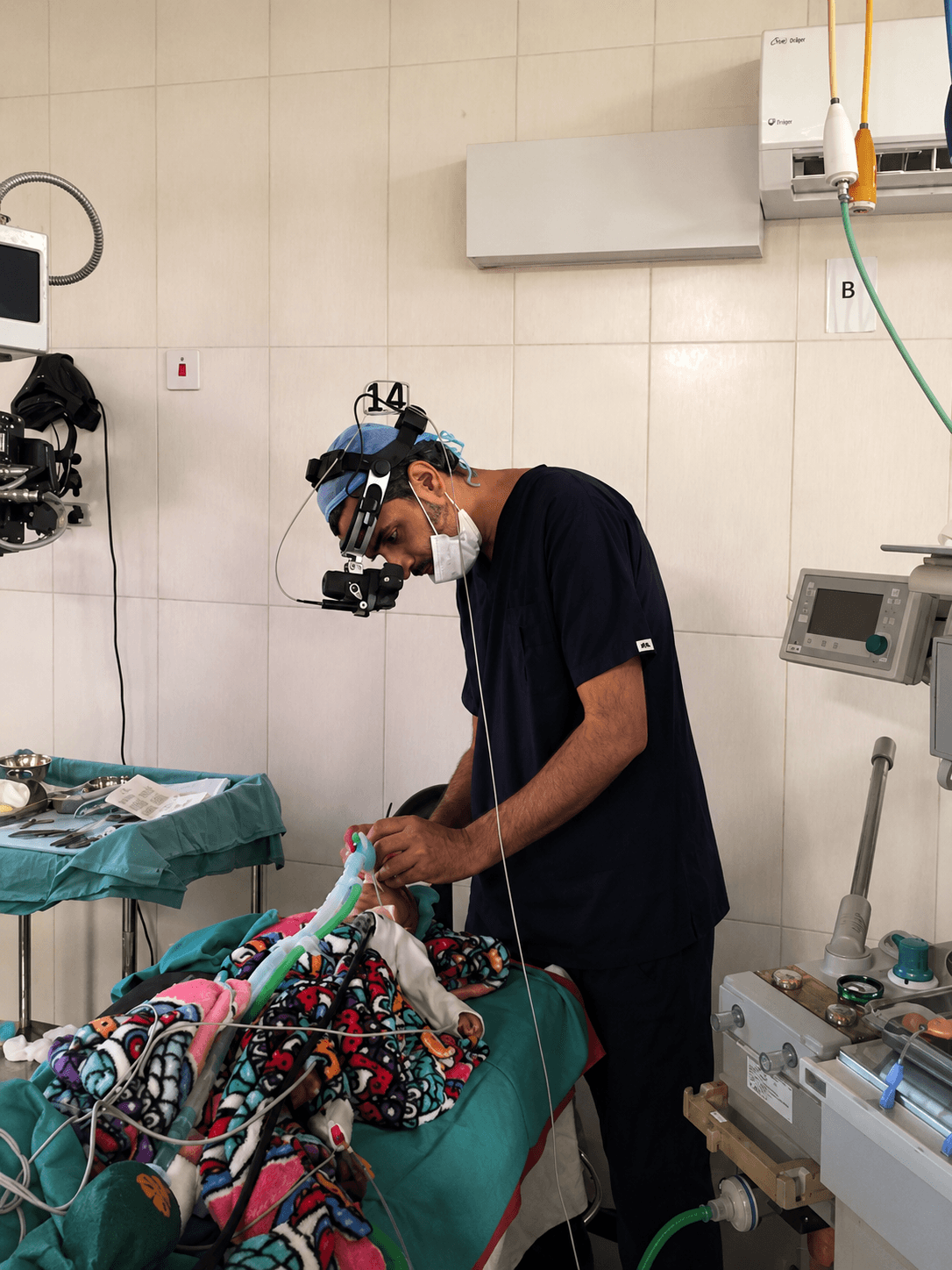
Treatments & Procedures
Dr. Amjad offers a comprehensive range of treatments for retinal and vitreous diseases — from clinic-based injections and laser procedures to complex surgical interventions. Each treatment plan is tailored to your individual eye condition.
Intravitreal Injections
Anti-VEGF agents
Steroid agents
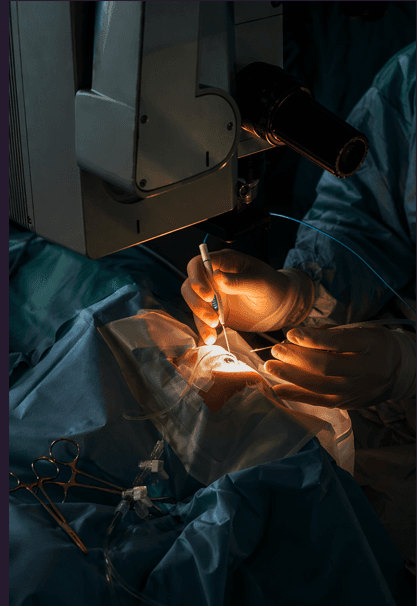
Injections are performed in the clinic under sterile conditions. Often repeated after 1–2 months depending on your eye condition — Dr. Amjad will discuss this with you.
Cataract and Laser Refractive Surgery
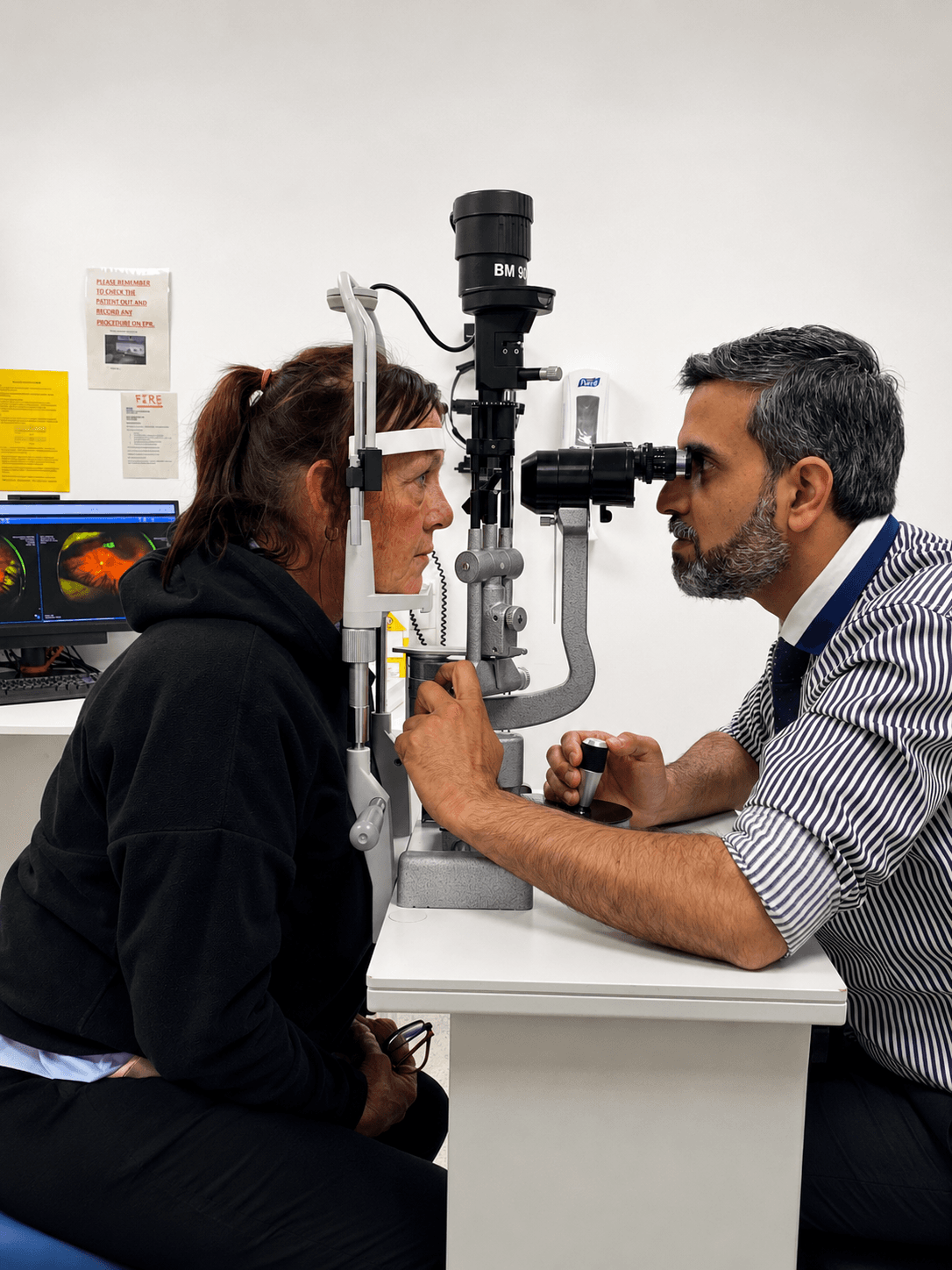
Laser treatment can be performed in the clinic for a range of retinal conditions. The laser is applied either at a slit lamp with a special contact lens or through a headlamp (indirect ophthalmoscope). You can resume normal daily activities immediately — no eye drops or patch required.
Vitrectomy & Buckle Surgery
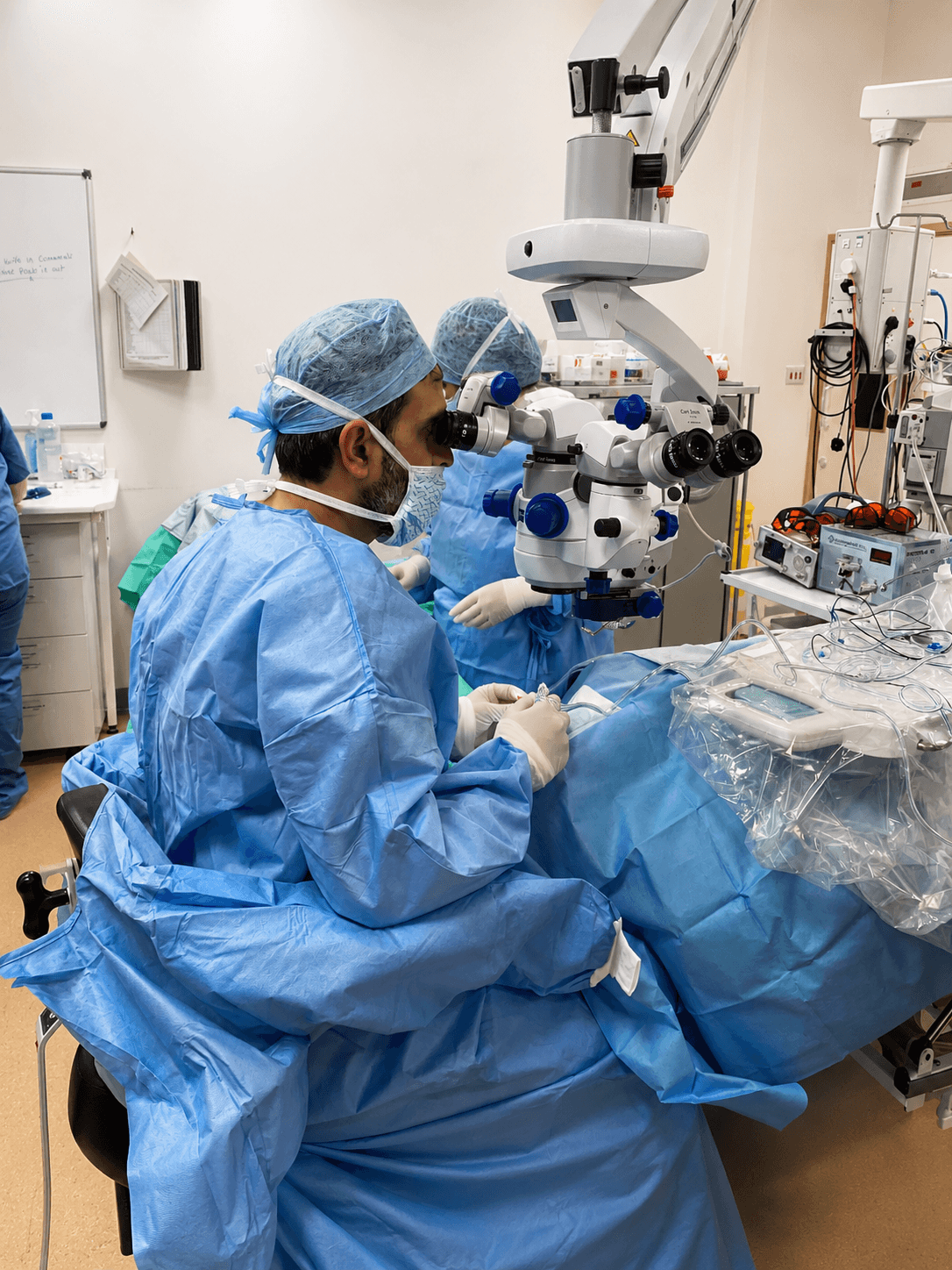
Vitrectomy is a keyhole surgical procedure performed through the white part of the eye (sclera), usually under local anaesthesia. During surgery you will be able to hear the operative team but will not see anything or feel any pain. Operations typically take between 30 minutes and 2 hours depending on complexity.
After Your Surgery
Eye patch
A patch will be placed on your eye after surgery — leave it on until the next morning.
Head positioning
Depending on the surgery, you may be asked to posture your head in a specific direction. A posture pillow (e.g. Summit Support) may help for extended periods.
Eye drops
You will be given eye drops to use for one month. The order is not important, but wait a few minutes between each drop.
Restrictions
Avoid excessive exertion, swimming, getting your eye wet, rubbing your eye or driving until advised by Dr. Amjad.
Gas bubble
If a gas bubble is placed in your eye, you must not fly or travel to high altitudes until it has fully dissolved.
Daily activities
You can read and watch television safely. Your vision may initially be blurred in the operated eye — this is normal.
Latest Equipment
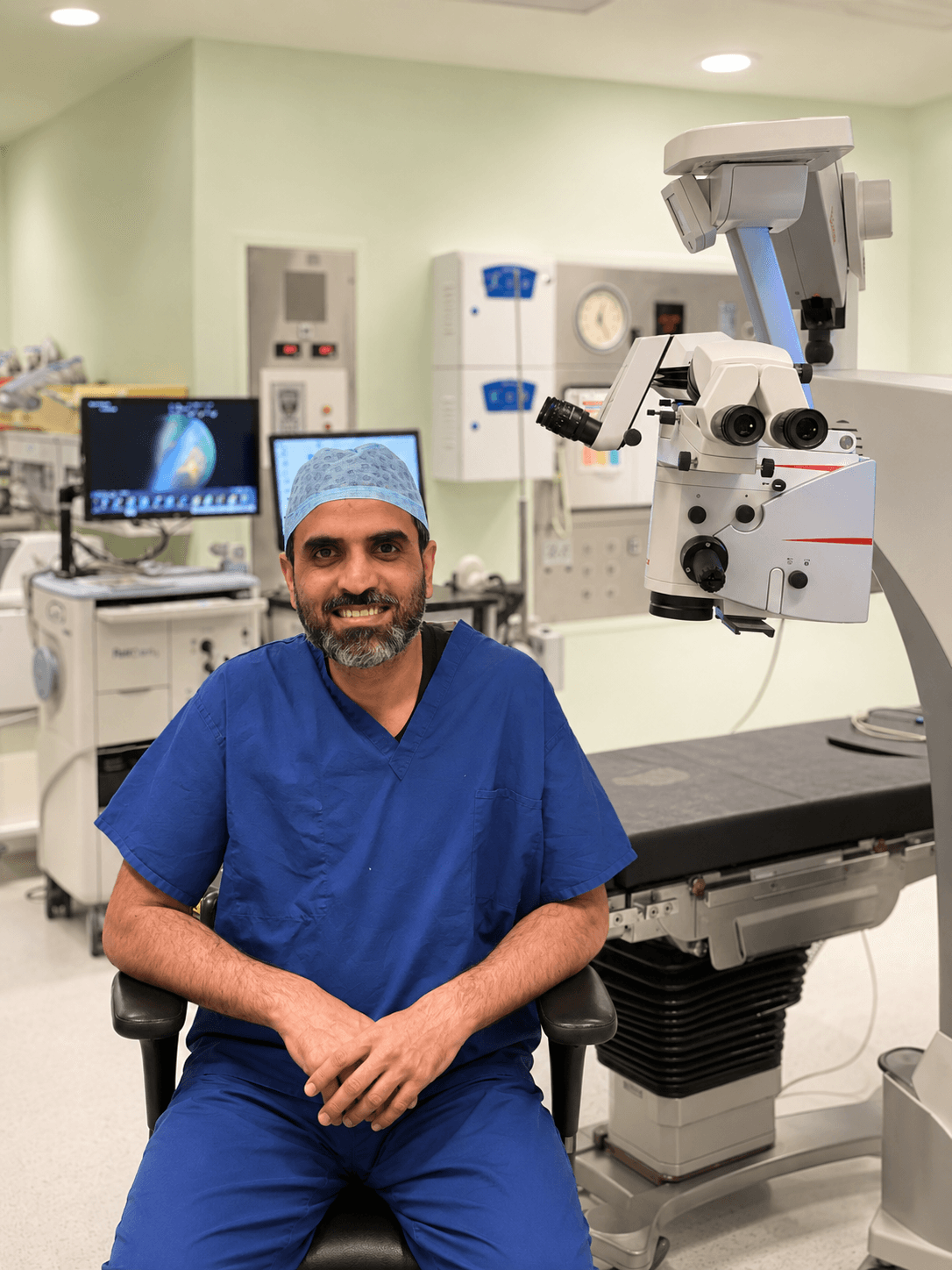
Dr. Amjad has access to the full suite of modern diagnostic and surgical equipment for your eye care.
Medical Disclaimer
The information on this page is provided for general guidance only and is not a substitute for professional medical advice. Please consult Dr. Amjad directly for advice regarding your specific condition. If you experience severe pain or sudden worsening of vision, contact the clinic immediately.
Ready to discuss your treatment options with Dr. Amjad?
Book a Consultation